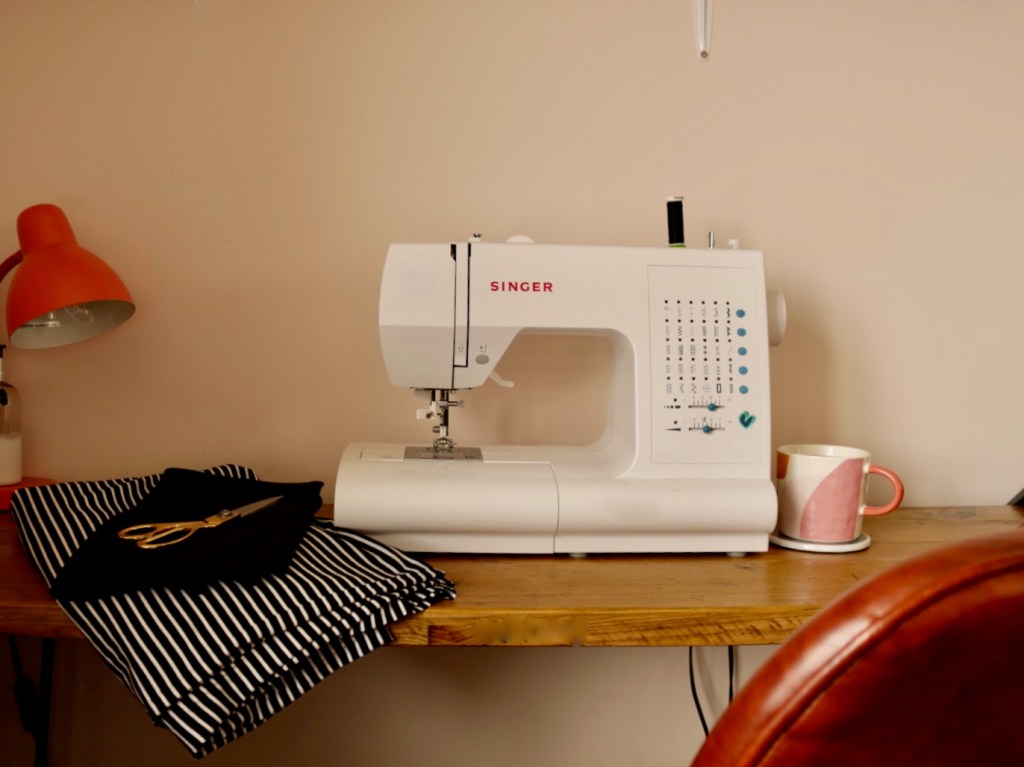
There are many different reasons behind everyone’s decision to sew. For some, it’s the chance to make unique garments that reflect one’s personal style. For others, it’s a creative outlet they can use to switch off after a busy day.
Confession: I love to sew, but haven’t always found it relaxing. There have been times when I would try and make garments quickly for the sake of an Instagram post, or sew tricky garments at the end of a busy day when my brain felt frazzled, and then get frustrated when items didn’t turn out as planned. Over the years, I’ve learned to embrace a slower approach to sewing and consider the items I want to make. I know now that sewing trickier garments is best done on weekends when I can dedicate a good chunk of time and equally, that just ten minutes organising my space can make a huge difference to my mood.
So, I wanted to share some tips about how I approach sewing which have helped ensure each sewing session is a more positive one.
Plan your makes
Have you ever started cooking a meal only to realise you’ve forgotten to pick up an essential ingredient at the store? We’ve all been there. Sewing can be a similar story; you decide on a pattern only to realise you don’t have quite enough fabric or you’re without all the necessary supplies. While you can adapt patterns and press ahead, having everything you need for a make can help you avoid last-minute online orders or long project pauses.
I went through a phase of plucking a pattern and some fabric from my stash for the sake of something to sew. Now there is nothing wrong with this, but personally, if I didn’t feel particularly excited about what I was sewing, it showed. The item would often remain unworn in my wardrobe for months. Planning projects a little in advance can help you stay in check with the sewing items you own and ensure you’re making garments you love to wear. I try to think about outfits and the items I might want to sew for the season ahead and note these down or save inspiration on Pinterest. I also add patterns and fabrics to online wishlists and use the Maker’s Workbook by Pattern Trace, which includes a really useful planning section as well as space to note down fabric already in my stash. I’ll ponder ideas and only when I’m sure I want to make a certain garment, I’ll buy everything I need. I also try to keep regularly used haberdashery items like interfacing or sewing machine needles topped up.
If you’re sewing a more advanced make, it might also be worth looking up some of the construction methods before you start to sew. Likewise, making a toile (I rarely do this but know it must be helpful!) will enable you to practice any techniques and account for any adjustments you need to make to your final garment.
Sewing subscriptions
Of course, feel-good sewing means loving what you make and wear. Our style preferences can change so if you’re not feeling happy in the clothes you’re wearing or you’re just not sure what to make, a sewing subscription might be worth a try. I was in two minds about trying a sewing subscription but I’m so glad I did. Working with patterns and fabrics I wouldn’t typically choose helped me figure out what I actually like to make and wear. Plus, it was such a treat receiving the pattern and fabric each month, it helped me feel excited about sewing, learn new techniques and discover new styles that I would not have initially thought would suit me.
Organise your space
I don’t know about you, but my space can get messy within a few minutes of starting a new project. I used to think the ‘pick up where you left off’ approach validated my leaving everything strewn across my sewing room. However, returning to a cluttered space kind of quashed any desire to sew. No matter if you’ve sewn for ten minutes, or a whole afternoon, tidying your space after each session can make a huge difference.
I know how tempting it can be to collect sewing-related items, but try to be mindful of what you need. Organising your patterns, fabric and haberdashery regularly will help you ensure you’re only holding on to items that you’re likely to use. I try to buy patterns and fabric at the same time so I know exactly how much material I’ll need for a certain project. If you can’t bear parting with an item, pop it in storage for a month or two and see if you miss it. If not, give it to a friend, charity shop or sell it.
I try to limit the space I have to store things, too. I keep patterns in a clear container by my desk and allocate one drawer for storing fabric and a separate bag for larger fabric scraps.
Balance your sewing projects
Do you tend to balance trickier projects with something simpler like sewing a T-shirt or scrunchie? I find balancing difficult makes with simpler ones helps to keep me motivated to sew. When I need a little confidence boost, I’ll often reach for simpler patterns that I love and feel pretty familiar with. Likewise, if I can dedicate a good chunk of time to sewing on the weekend, I might choose something slightly more advanced. Be aware of what you have the time and energy to do. If you don’t feel like sewing, maybe take some time to organise your space or start thinking about what you might want to wear during the season ahead.
Take regular breaks
I used to treat sewing days like a regular 9-5, sometimes I’d go the whole day without a break and end up feeling exhausted. Surely, I should be feeling relaxed after sewing, I thought. It’s amazing how a little break from your machine can bring more clarity to sewing instructions. If I’m sewing for most of the day, I’ll make sure I’m making a drink every couple of hours and that I stop when I’m feeling tired.
A final note
It took me a long time to stop measuring my sewing skills against others. I used to be in awe of sewists who could complete a garment in a day. Now, instead of setting goals of finishing a make by a certain time (which, I never actually managed anyway!), I see sewing as a chance to relax and slow down, which, in turn, has helped maintain my motivation. As I write this I’m making a pair of jeans, which will likely take me a few weeks to complete and that’s okay.
If you’re looking for sewing advice and want to discuss a project, reaching out to the sewing community is so worth doing. I love reading people’s pattern reviews on Minerva, it’s great if you want to discuss patterns and fabrics with other sewists.
Every project is a chance to learn, develop your style and skills, and indulge your creative side, which is so important for our mental wellbeing. I’d love to hear your tips on how you stay motivated to sew.
 Lorna Rothery